


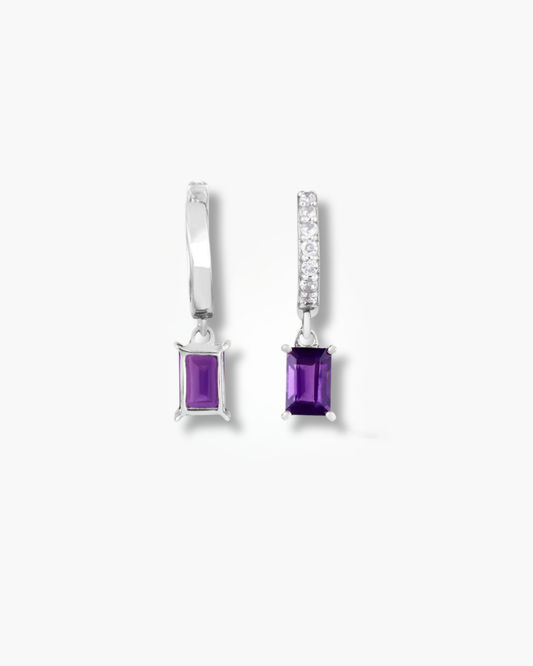
The Amethyst
The most popular variety of quartz, renowned for its splendorous royal purple hues.

Overview
Renowned for its splendorous hue, the amethyst is the most popular variety of quartz. Formed underground in hollow rock geodes as prismatic clusters, its prized color—ranging from pale lilac to deep, intense purple—is caused by trace presence of iron and aluminum impurities.
Historically equivalent in value to rubies and sapphires, the discovery of huge South American deposits increased its availability. Today, while South America remains prominent for large stones, amethysts are mined globally across Brazil, Canada, Africa, Australia, and India, with African mines known for deeply saturated, smaller stones.
Symbolism
Derived from the Greek term "amethystos" (meaning "not being inebriated"), ancient lore held that the stone possessed powers to negate alcohol effects and promote sobriety. Because purple dye was historically rare, the gem became a powerful symbol of royalty, adorning ancient Egyptians, British monarchs, and church bishops (earning it the nickname "the stone of bishops").
As the birthstone for February and the gem for 6th and 17th wedding anniversaries, it remains a symbol of contentment, spiritual clarity, and calm energy.
Physical Properties & Quality
Hardness & Strength
Amethyst holds a rating of 7 on the Mohs scale, making it relatively hard, scratch-resistant, and durable. This makes it a popular, sturdy choice for both simple and ornate jewelry pieces, including daily-wear rings.
Treatment
Amethysts are frequently heat-treated (400°C to 500°C) to enhance clarity and permanently intensify lighter stones into rich royal purple shades. In rare cases, a fracture-filling treatment may be used to improve overall clarity.
Color & Clarity
Ranging from pale lilac to deep reddish-purple, stones with high color saturation and minimal color zoning are the most valuable. Most faceted amethysts on the market are completely free from eye-visible inclusions.
Cut & Carat Weight
Amethysts are cut into a massive variety of traditional shapes (pear, emerald-cut, square, round, oval, cushion, heart) as well as expensive custom designer free-hand shapes. Because they are abundant in large sizes, value depends heavily on color rather than carat weight.
Amethyst Grading System
Top 1%
Comprising the top 1% of extremely rare amethysts, these gems are completely eye-clean and boast a distinctive, highly sought-after dark purple hue.
Top 10%
This category comprises the top 10% of amethyst stones. These beautiful gems are also eye-clean and showcase a radiant medium-dark purple color.
Top 33%
Representing the top 33% of available amethysts, these stones are medium purple in color and feature only slight natural inclusions.
Top 75%
Light purple in hue, this entry-level category includes stones that feature slight to moderate visible inclusions.
Amethyst Care Instructions
Amethyst is a fairly hard stone and ideal for regular wear, but following a few simple precautions will keep its royal luster looking brand new:
- Avoid Direct Sunlight: Prevent prolonged exposure to direct sunlight and high temperatures, as intense heat can lead to color fading or discoloration.
- Gentle Cleaning: Clean using a solution of mild soap and a soft brush or sponge. Wipe dry with a soft cloth.
- Machine Cleaning: Ultrasonic cleaners are usually safe for amethysts, but must be avoided if the stone is dyed or fracture-filled. Avoid steam cleaning entirely to prevent thermal shock.
- Remove For Chores: Take off your amethyst jewelry when performing heavy household chores or indulging in strenuous physical activities.
- Avoid Chemicals: Keep your jewelry away from harsh chemicals, household cleaners, cosmetics, and hairspray.
- Safe Storage: Store your jewelry separately in a fabric-lined box or wrap it in a soft cloth to avoid scratching against other gems.